For two years, the orange construction fencing at Delmar and Leland stopped registering as construction. It became part of the walk. If you were headed west past Vintage Vinyl and the Chuck Berry statue toward the Loop's quieter end, you knew to step around it, and you knew the storefronts behind it weren't storefronts anymore. They were a steel frame that had been sitting there since ground broke in September 2024.
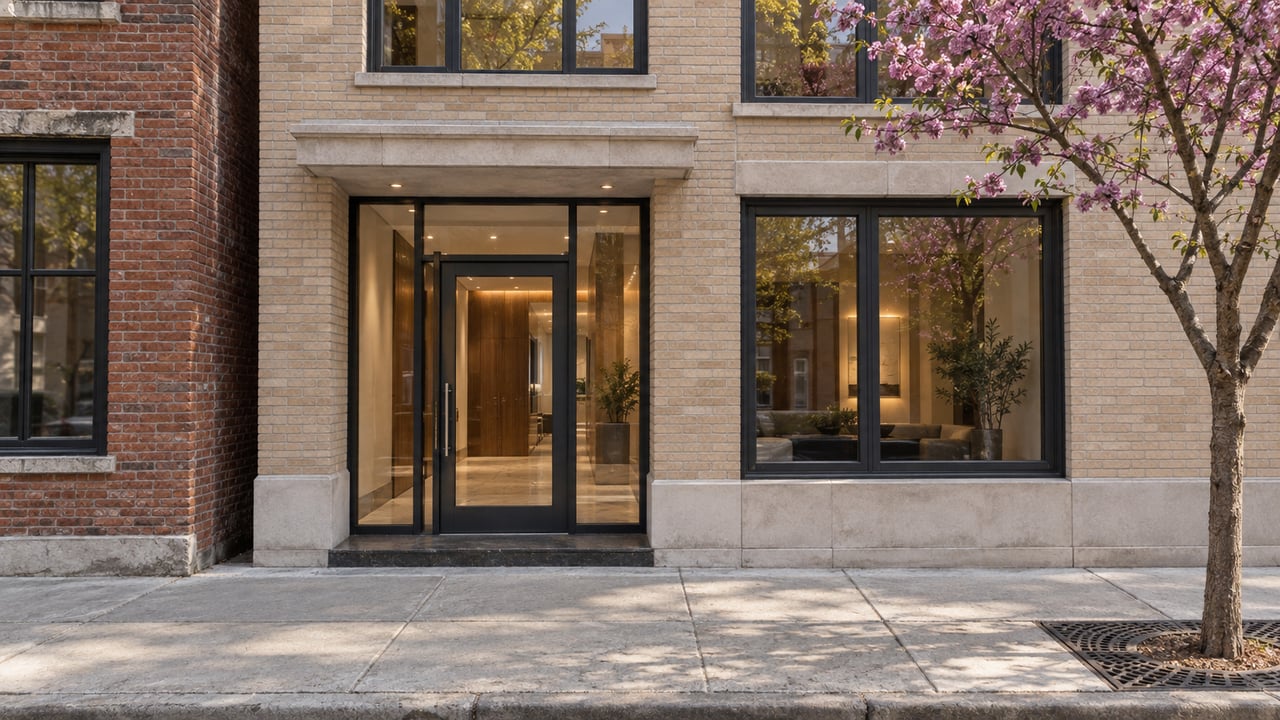
That fence is down now. Residents started moving into LOCAL on Delmar, the five-story building anchoring that corner, on August 13, the date the property's own leasing office set as move-in day. Two years of scaffolding ended more or less on schedule.
Here's the part that's easy to miss walking past: the block didn't wait for the crane to leave before it started coming back.
A bakery moved in before the building next door was finished
On January 31, Bridge Bread Bakery opened its second location at 616 N. Skinker Blvd., a half block from where the apartment tower was still under a roof but not yet a lobby. St. Louis Mayor Cara Spencer showed up for the ribbon cutting. Bridge Bread has run its original bakery on Cherokee Street for more than a decade, training people experiencing homelessness in a working kitchen and paying them for the loaves they turn out. The Loop location is the nonprofit's first expansion in that time, and it took over three adjacent storefronts designed to run on foot traffic rather than the wholesale model Cherokee Street relies on.
Founder Fred Domke has said the Loop bakery came with one non-negotiable request before it even opened. When he told Joe Edwards, the Loop businessman behind Blueberry Hill, that Bridge Bread was setting up shop nearby, Edwards had a condition.
"He said we needed to have bagels."
They have bagels now, including a French onion soup bagel that's become part of the shop's rotating menu. The Loop location is open Wednesday through Friday from 7:30 a.m. to 2 p.m. and Saturdays from 9 a.m. to 2 p.m., built around the same grab-and-go rhythm that Washington University students and Loop regulars already move through on their way to campus or the Metro stop.
A ramen chef bet on the same stretch, in the same window
A few doors down at 6394 Delmar, chef-owner Steven Pursley opened Kishimoto Mendō this spring, bringing the handmade noodle program he built at his acclaimed South City spot Menya Rui to the Loop's west end. Like Bridge Bread, Kishimoto Mendō didn't wait for LOCAL on Delmar's ribbon cutting. It opened while the building next door was still fenced off, on a block that had spent two years being defined by what wasn't there.
What had actually left that block matters here. Peacock Diner, a Delmar Loop fixture for a decade, closed its doors around the same time construction broke ground on the apartment site. For a stretch of Delmar that already had a hole in it, losing a longtime anchor while a chunk of sidewalk disappeared behind fencing looked like the kind of double blow a commercial strip doesn't recover from quickly.
The block's problem was never a lack of people walking past it
That's the part worth sitting with. A bakery and a ramen shop don't open on a whim, and neither business waited for the apartment building to hand over a single key before betting on that stretch of Delmar. Bridge Bread spent two years and two fundraising galas building toward a January opening. Kishimoto Mendō committed to a build-out on a block still wrapped in construction fencing. Both bets landed on the same short run of sidewalk, in the same year, without either one depending on the other to work.
If the west end of the Loop had genuinely lost its customer base, that's a hard pattern to explain. What it lost was a fence's worth of visibility and one long-running diner. Foot traffic on Delmar didn't stop existing between 2024 and 2026. It kept walking past a construction site toward the Loop's busier east end, the stretch the East Loop Community Improvement District says added new businesses at a steady clip over the same two years. The west end's storefronts went dark, but the sidewalk in front of them never did.
What LOCAL on Delmar adds now that the fence is gone
The building itself changes the math in a different way than either restaurant did. LOCAL on Delmar is 259 units across 398,225 square feet, built by Brinkmann Constructors and designed by ESG Architecture & Design for Subtext, the St. Louis based developer that also delivered VERVE St. Louis near Saint Louis University. Beyond the studio, one, two, and three bedroom units and townhomes, the project includes more than 7,000 square feet of street level retail connected to an outdoor dining patio, directly across from Corner 17 and next to Vintage Vinyl.
That retail space is still leasing. Nobody driving or walking past that corner right now can say with certainty which storefronts fill in next, and residents who've watched this block for two years have earned some skepticism about announced timelines. But the arithmetic underneath it doesn't depend on any single tenant. Two hundred fifty nine households now walk out their front doors directly onto a stretch that already has a working bakery and a ramen counter within a few storefronts of home. That's a different scale of daily foot traffic than one new restaurant opening on its own ever could have produced.
What's actually open if you're walking that way this week
Bridge Bread's Loop location sells fresh baked goods made the same day, with any leftovers going to the nonprofit's wholesale line rather than sitting out overnight. Kishimoto Mendō is serving the same handmade noodle program Pursley built his reputation on at Menya Rui, now with a west Loop address instead of a South City one. Both sit within easy walking distance of the Loop Trolley stop and the stretch of Delmar that runs past the St. Louis Walk of Fame stars for Chuck Berry, Maya Angelou, and the rest of the names embedded in that sidewalk.
The fence is gone. The diner that used to anchor that corner isn't coming back. What replaced it wasn't a single big reopening but two separate, independently timed decisions by people who read the same sidewalk differently than the empty storefronts suggested they should have.
If you've been curious what two years of infill construction actually does to a stretch of the Loop once the dust settles, that's exactly the kind of on the ground read The Realty Shop tracks block by block across University City and the rest of St. Louis. Start a Private Conversation whenever you want to talk through what a changing corner like this one means for property nearby.